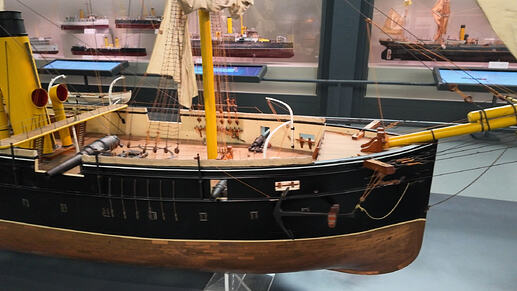
佛了,想要衔接原视频从左到右的运镜,然后做一个船模从博物馆丝滑过渡到海上,船样式不变只是细节变丰富这样,不大清楚运镜术语,只能按自己理解描述,结果出来不是模型搞反运镜:

就是搞错过渡:

要不然直接变了艘船 ^-^,前前后后试了30次左右,没一个满意的
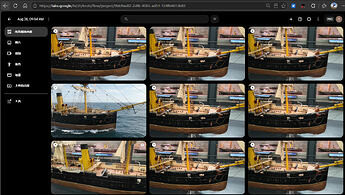
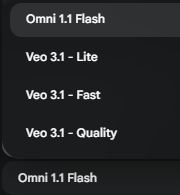
不知道是不是因为模型比较拉,用的是谷歌flow里的视频模型:
提示词改了好几版,我放两个:
1.运镜错误,切换正确的:
Use the uploaded image as the EXACT FIRST FRAME. One continuous physical camera take, 10 seconds.


SCREEN-SPACE MOTION — the single most important instruction:

Every element in the frame drifts steadily toward the LEFT EDGE of the frame.

The ship's bow and bowsprit, which start at frame right, travel toward frame centre and continue leftward.

Fresh background continuously enters from the RIGHT EDGE of the frame.

The yellow funnel exits through the left edge early in the shot.


The camera is on a straight physical rail parallel to the hull, trucking steadily in the direction

the bowsprit points. It stays on the same side of the ship for the whole take. Pure lateral

translation with natural parallax — the camera body does not rotate.


SPEED: constant drift of about 5% of the frame width per second for the first 3 seconds

(≈90 px/sec at 1920 wide). Perfectly linear, no acceleration, no easing in or out.

This is NOT a redesign of the ship.

This is the SAME physical ship captured continuously by the SAME camera.

Maintain perfect object permanence throughout the entire shot.


=== SHIP LOCK ===


The ship's geometry is locked.


Do not change:

- hull silhouette

- bow shape

- stern shape

- mast positions

- mast count

- bowsprit length and angle

- railing layout

- deck layout

- rope positions

- cannon-port positions

- color blocking

- proportions


Every visible structural detail from the first frame must remain consistent.


Only increase realism of existing surfaces:

wood grain becomes richer,

paint becomes weathered,

metal becomes more realistic,

ropes gain natural fiber texture.


Never replace the ship with another historical vessel.


0–3s: The camera continues its uninterrupted physical tracking movement.

The museum does NOT transition into the ocean as a visual effect.

There is NO wipe, NO sliding background, NO dissolving boundary, NO scene replacement.

The camera simply continues moving through one continuous physical space.

As the camera advances along its rail, the museum's interior gradually falls outside the camera's field of view through natural perspective and parallax.

At the same time, the existing outdoor environment is progressively revealed beyond the museum: natural daylight, open sky, atmospheric depth and eventually the distant ocean horizon.

Nothing is inserted into the frame and nothing is replaced.

There is never a visible transition line between the museum and the ocean.

The ocean does not wipe across the frame.

The background remains spatially continuous while the camera moves through it.

Most importantly, the SAME SHIP remains continuously visible during the entire transition.

The ship does not disappear, dissolve, morph, or change identity.

Its geometry remains unchanged.

Only the lighting gradually becomes natural daylight and the existing surface detail becomes increasingly visible.


3–5s: The ocean fills the background. From about 4s the ship itself gets under way, moving forward

in the same direction the camera travels. The camera matches the ship's speed, so the vessel settles

near frame centre while the ocean and horizon keep sliding leftward past the hull.

Bow cuts rolling swells, strong bow wave, whitewater, spray, long turbulent wake. The hull rises,

falls and pitches with the swells. Full-scale and physically heavy.


7.5–10s: Still tracking alongside, the camera very slowly dollies back on the rail. The seascape opens

up, the ship gets slightly smaller but stays the clear central subject. Continuous bow spray and wake.


VESSEL — one continuous object:

Same 19th-century black-hulled steam-assisted sailing ship from first frame to last.

Hull silhouette, bow, stern, yellow funnel, mast count and positions, bowsprit, deck, railings and

rigging all stay locked and identical.

Only the MATERIAL DETAIL develops as the light turns natural: richer wood grain, subtle weathering,

realistic metal, fine rope and rigging texture, surface imperfections, wet reflections, sea spray and

water droplets. The viewer reads it as the same ship gaining photographic detail.

The vessel carries no flag, ensign, pennant or national marking anywhere — bare masts, rigging,

stern, bow and deck, exactly as in the reference image.


Photorealistic historical maritime cinematography. Natural daylight. One continuous steady take.

NO ADDED FLAGS.

NO NATIONAL SYMBOLS.

NO FLAGS THAT ARE NOT PRESENT IN THE REFERENCE IMAGE.
2.运镜正确,切换错误:
Use the uploaded image as the EXACT FIRST FRAME. One continuous physical camera take, 10 seconds.


SCREEN-SPACE MOTION — the single most important instruction:

Every element in the frame drifts steadily toward the LEFT EDGE of the frame.

The ship's bow and bowsprit, which start at frame right, travel toward frame centre and continue leftward.

Fresh background continuously enters from the RIGHT EDGE of the frame.

The yellow funnel exits through the left edge early in the shot.


The camera is on a straight physical rail parallel to the hull, trucking steadily in the direction

the bowsprit points. It stays on the same side of the ship for the whole take. Pure lateral

translation with natural parallax — the camera body does not rotate.


SPEED: constant drift of about 5% of the frame width per second for the first 3 seconds

(≈90 px/sec at 1920 wide). Perfectly linear, no acceleration, no easing in or out.

This is NOT a redesign of the ship.

This is the SAME physical ship captured continuously by the SAME camera.

Maintain perfect object permanence throughout the entire shot.


=== SHIP LOCK ===


The ship's geometry is locked.


Do not change:

- hull silhouette

- bow shape

- stern shape

- mast positions

- mast count

- bowsprit length and angle

- railing layout

- deck layout

- rope positions

- cannon-port positions

- color blocking

- proportions


Every visible structural detail from the first frame must remain consistent.


Only increase realism of existing surfaces:

wood grain becomes richer,

paint becomes weathered,

metal becomes more realistic,

ropes gain natural fiber texture.


Never replace the ship with another historical vessel.


0–3s: The museum interior slides out through the left edge by physical camera movement and

parallax. Natural daylight rises. Sky, then a distant sea horizon, appear entering from the right.

The background changes continuously around one unbroken vessel.


3–5s: The ocean fills the background. From about 4s the ship itself gets under way, moving forward

in the same direction the camera travels. The camera matches the ship's speed, so the vessel settles

near frame centre while the ocean and horizon keep sliding leftward past the hull.

Bow cuts rolling swells, strong bow wave, whitewater, spray, long turbulent wake. The hull rises,

falls and pitches with the swells. Full-scale and physically heavy.


7.5–10s: Still tracking alongside, the camera very slowly dollies back on the rail. The seascape opens

up, the ship gets slightly smaller but stays the clear central subject. Continuous bow spray and wake.


VESSEL — one continuous object:

Same 19th-century black-hulled steam-assisted sailing ship from first frame to last.

Hull silhouette, bow, stern, yellow funnel, mast count and positions, bowsprit, deck, railings and

rigging all stay locked and identical.

Only the MATERIAL DETAIL develops as the light turns natural: richer wood grain, subtle weathering,

realistic metal, fine rope and rigging texture, surface imperfections, wet reflections, sea spray and

water droplets. The viewer reads it as the same ship gaining photographic detail.

The vessel carries no flag, ensign, pennant or national marking anywhere — bare masts, rigging,

stern, bow and deck, exactly as in the reference image.


Photorealistic historical maritime cinematography. Natural daylight. One continuous steady take.
话说有加了no flag,有时候还是会给我生成的什么英国国旗的,抽卡成本有点高 ^-^,虽然我用的pro账号,每个月有1000积分,但是光这些个就耗了我400+积分了,之前提示词都是给gpt网页端或者claude opus5去优化的,gpt生成的提示词非常长,感觉和以前玩sd的提示词一样,加一堆正向反向的词,claude这边生成的比较短,更多是连贯些的句子。
还有首帧:

 禄眠 08-30 11:091楼
 xxxxt 08-30 23:463楼